


What Did Machu Picchu Originally Look Like?
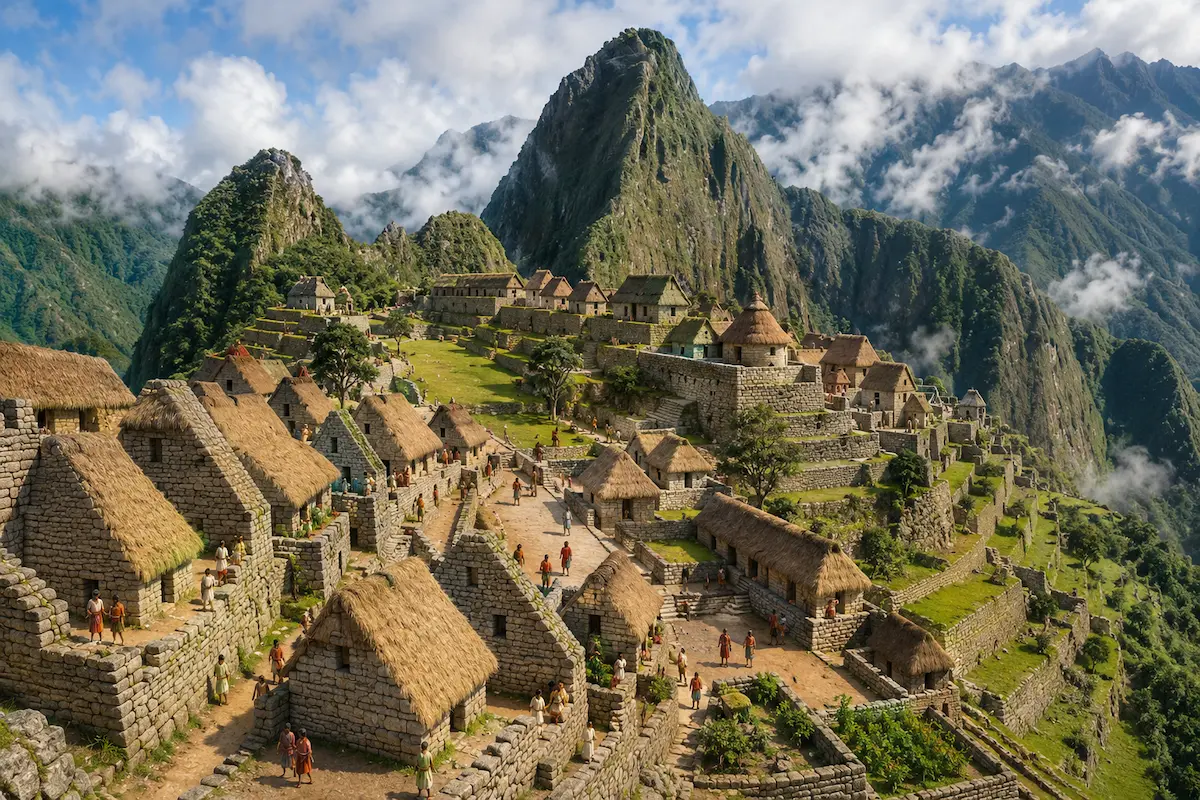
Machu Picchu was not a city of exposed stone ruins. Its buildings had roofs, its terraces were maintained, water flowed through its fountains and canals, and people moved through its narrow streets, plazas, temples, and residential areas.
Although no illustration from the Inca period survives, archaeology and the architecture still standing at the site give us a surprisingly good idea of what Machu Picchu originally looked like.
What Did Machu Picchu Look Like When the Incas Lived There?
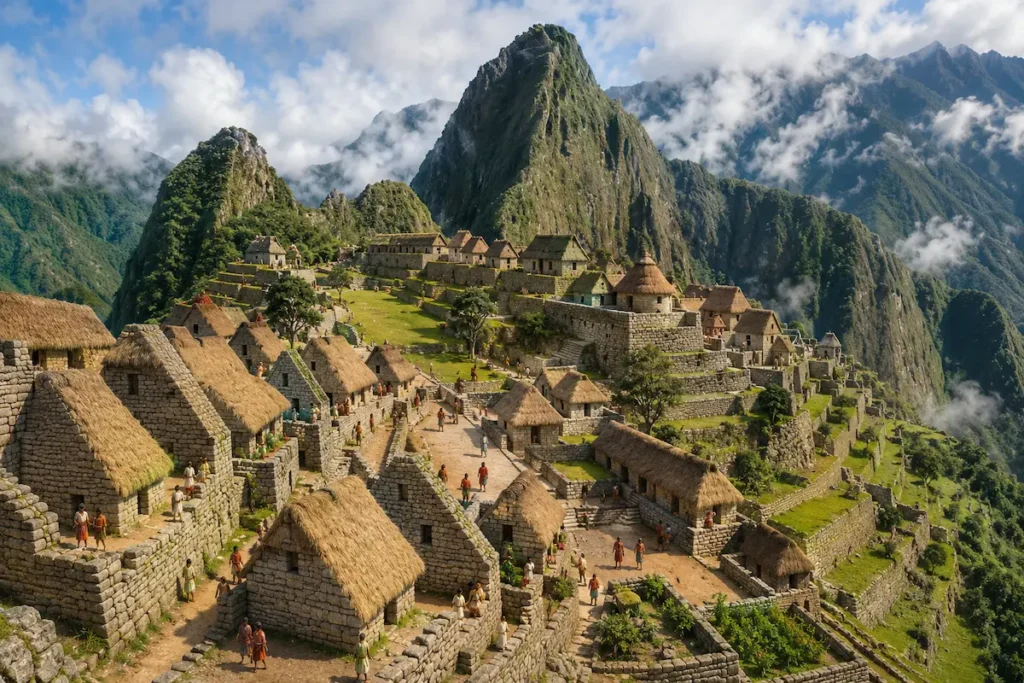
Imagine approaching Machu Picchu around the 15th century.
Instead of the roofless structures visible today, you would have seen groups of stone buildings covered by steeply pitched thatched roofs. Agricultural terraces descended along the mountainside, while paths and stone stairways connected different parts of the settlement.
The city was carefully organized around the natural shape of the mountain. There were residential buildings, ceremonial spaces, plazas, agricultural areas, fountains, drainage channels, and finely constructed structures associated with the Inca elite.
Most importantly, Machu Picchu would have looked inhabited and functional, rather than archaeological.
The mountains surrounding it, however, would have looked much as they do today.
The Buildings Had Thatched Roofs
One of the biggest differences between ancient Machu Picchu and the modern ruins is immediately obvious:
The original buildings had roofs.
The roofs disappeared centuries ago because they were made primarily from perishable materials rather than stone.
The surviving triangular gable walls help archaeologists understand their original shape. Roofs were most likely constructed with wooden structural elements and covered with ichu, a type of Andean grass traditionally used for thatching.
They were steeply pitched, which was particularly useful in Machu Picchu’s rainy mountain environment because water could drain away quickly.
Picture the stone buildings visible today topped with large golden-brown grass roofs, and Machu Picchu immediately begins to look much more like a living Inca settlement.
What Color Was Machu Picchu?
Machu Picchu probably wasn’t dramatically colorful in the way some ancient cities were.
Stone remained one of its dominant visual elements.
The walls were constructed primarily from local granite, producing the gray stone appearance that continues to characterize the site today.
But the overall city would have contained considerably more color than the ruins suggest.
You would have seen:
- golden and brown thatched roofs
- green agricultural terraces
- cultivated crops
- wooden architectural elements
- textiles worn by inhabitants
- vegetation surrounding the settlement
- flowing water in fountains and channels
So while the stone architecture itself may have looked relatively familiar, the complete settlement would have been much warmer and more colorful than the gray ruins travelers see today.
Machu Picchu Was Surrounded by Agricultural Terraces
The terraces are among the parts of Machu Picchu that most closely preserve the appearance of the original site.
Hundreds of terraces were constructed across the steep mountain slopes.
Some supported agriculture, while the terrace system also helped stabilize the terrain and control water and erosion in an environment characterized by steep slopes and substantial rainfall.
When Machu Picchu was active, these terraces would have been carefully maintained rather than simply covered in grass for visitors to admire.
Cultivated areas would have made the edges of the settlement appear greener and more productive.
The terraces were not merely decorative landscaping.
They formed part of a sophisticated engineering system that helped make permanent occupation of such difficult terrain possible.
The Urban Area Would Have Been Full of Roofed Buildings
Today’s Machu Picchu can sometimes give the impression of being dominated by open green spaces.
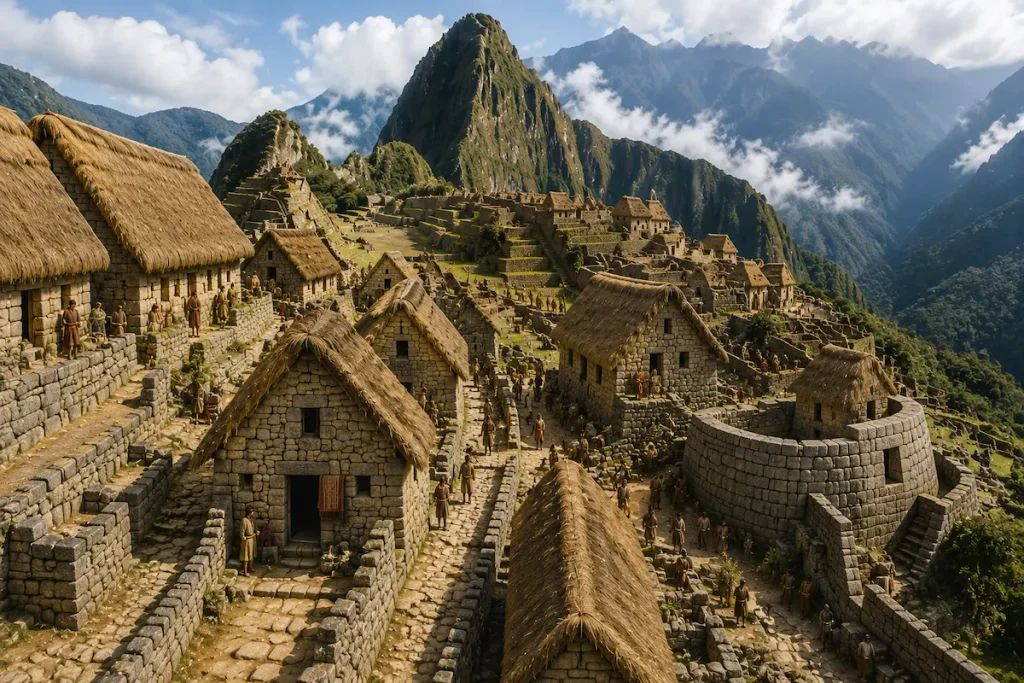
Originally, its urban sector would have felt considerably more enclosed.
Roofed buildings stood close together and were connected through narrow passageways, staircases, courtyards, and plazas.
Some buildings were relatively simple, while important ceremonial and elite structures displayed exceptionally refined stonework.
The famous trapezoidal doors and windows that remain today would have appeared underneath large roofs rather than standing exposed against the sky.
Walking through Machu Picchu would therefore have felt much more like moving through a small mountain settlement.
The Temples Would Have Looked Different Too
Some of Machu Picchu’s most recognizable structures were already visually distinctive during the Inca period.
Temple of the Sun
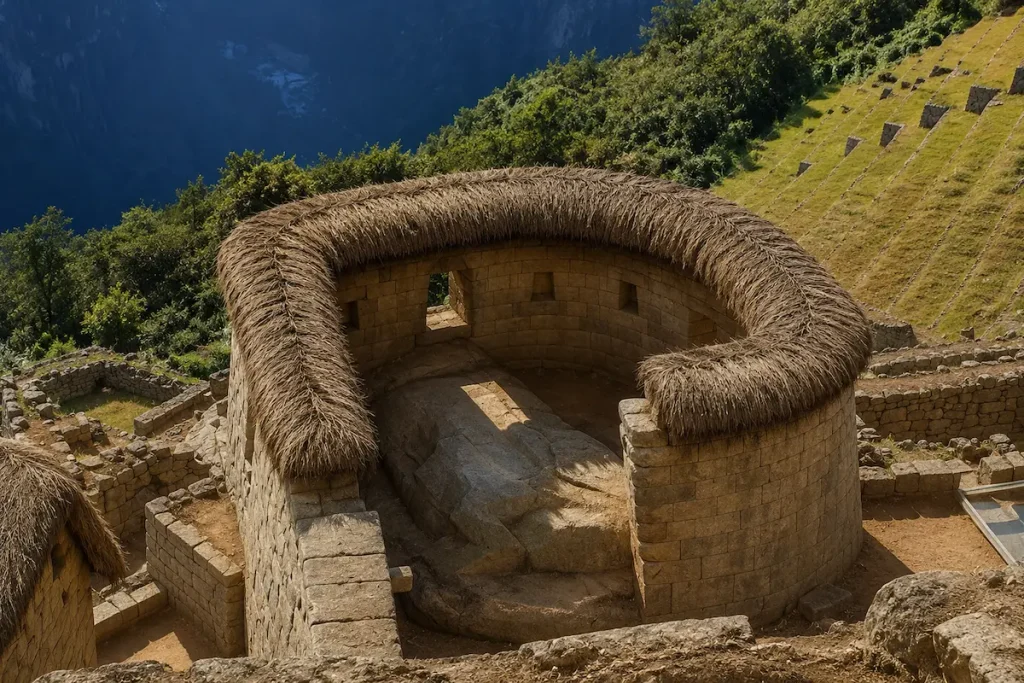
The Temple of the Sun features one of Machu Picchu’s most recognizable curved stone walls.
Its finely worked masonry distinguished it from more ordinary buildings, while windows and architectural orientation connected the structure with important celestial observations.
With its original roof and surrounding structures intact, the temple would have appeared much more complete than the open stone enclosure visitors see today.
Temple of the Three Windows
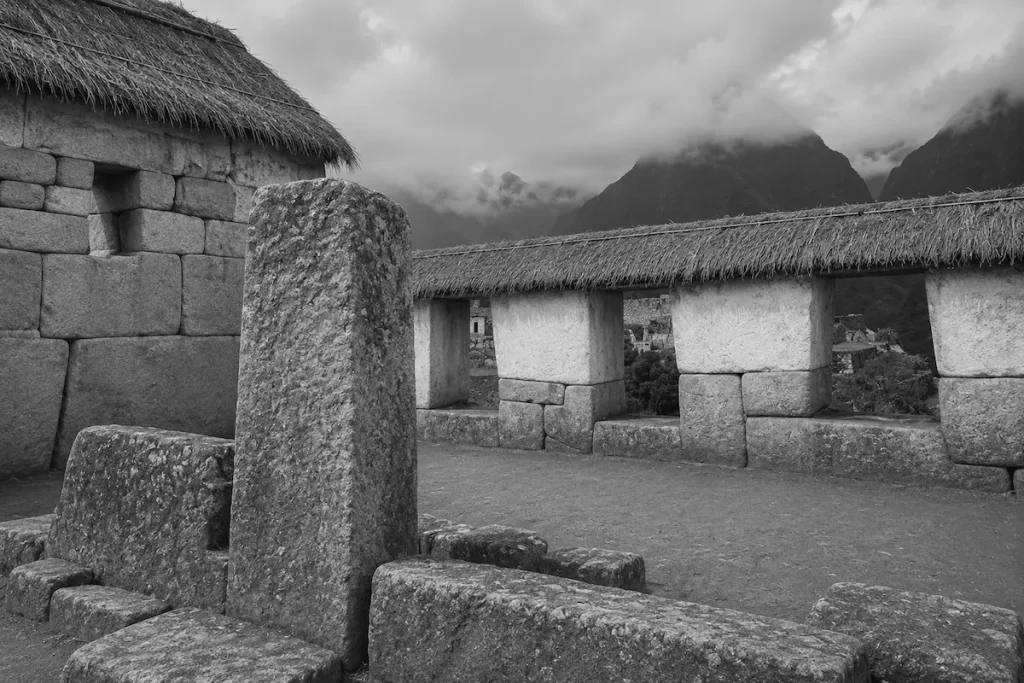
The Temple of the Three Windows formed part of an important ceremonial area.
Its massive stone blocks and characteristic trapezoidal openings would have made it an impressive architectural feature even when Machu Picchu was occupied.
Intihuatana
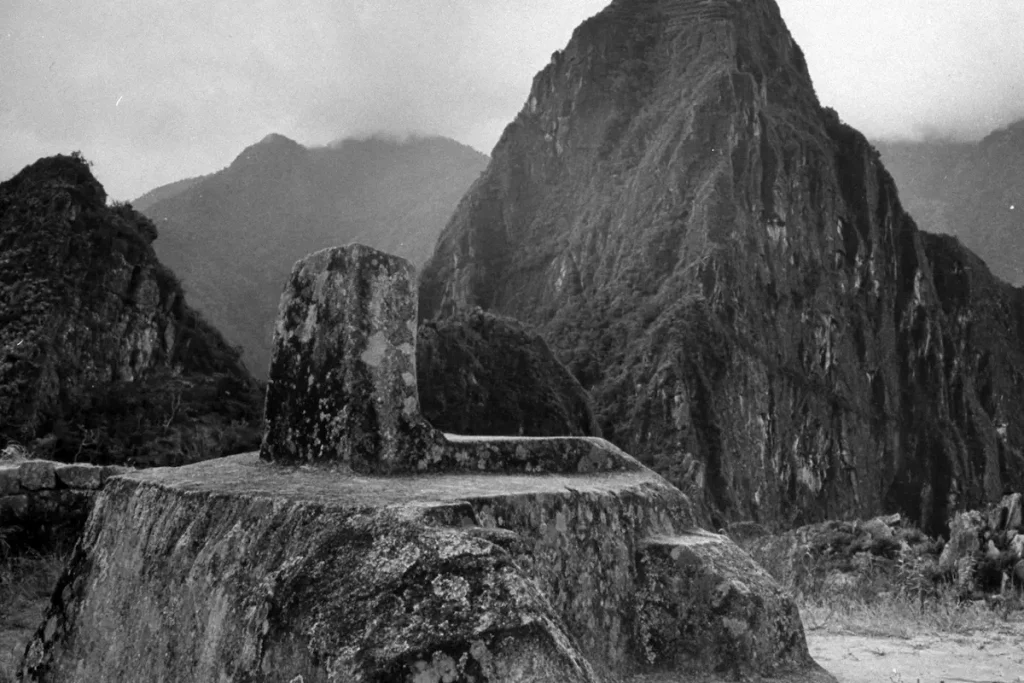
The carved rock known as the Intihuatana would have occupied a prominent ceremonial position much as it does today.
However, rather than appearing as an isolated archaeological attraction, it would have existed within an active ceremonial landscape used and understood by the people living at Machu Picchu.
Water Was Flowing Throughout Machu Picchu
Another detail that’s easy to overlook when imagining the original city is water.
The Incas constructed an impressive hydraulic system that brought water from a natural spring into the settlement.
Water traveled through carefully engineered channels and a sequence of fountains before continuing through different parts of the site.
Drainage was equally important.
Machu Picchu receives significant rainfall, and the Incas engineered terraces, foundations, channels, and drainage features to move water away from structures.
In the 15th century, Machu Picchu wasn’t simply a collection of stone buildings surrounded by mountains.
It was a functioning engineered landscape.
People Would Have Changed the Appearance Completely
Perhaps the biggest difference cannot be reconstructed by restoring a roof or wall.
Machu Picchu had people.
The archaeological site visitors photograph today is quiet and carefully preserved. In the Inca period, people would have been walking through passageways, preparing food, maintaining buildings, carrying supplies, producing textiles, participating in ceremonies, tending agricultural areas, and using the water system.
Brightly patterned Andean textiles would also have contrasted with the relatively neutral colors of granite walls and grass roofs.
The soundscape would have been different too: conversations, footsteps, animals, flowing water, wind, and everyday activity would have replaced the atmosphere of an archaeological monument.
What Did Machu Picchu Originally Look Like From Above?
From the surrounding mountains, the overall shape of Machu Picchu would still be recognizable.
Huayna Picchu would rise behind the settlement exactly as it does in modern photographs, while the steep mountains and Urubamba River valley would surround the ridge.
But inside that familiar landscape would be a much denser settlement.
Instead of rows of exposed stone walls, you would see clusters of pitched roofs separated by plazas and pathways, surrounded by extensive green terraces.
This is perhaps the easiest way to imagine ancient Machu Picchu:
the landscape we recognize today, but with a complete and functioning Inca settlement built into it.
Machu Picchu: Then and Now
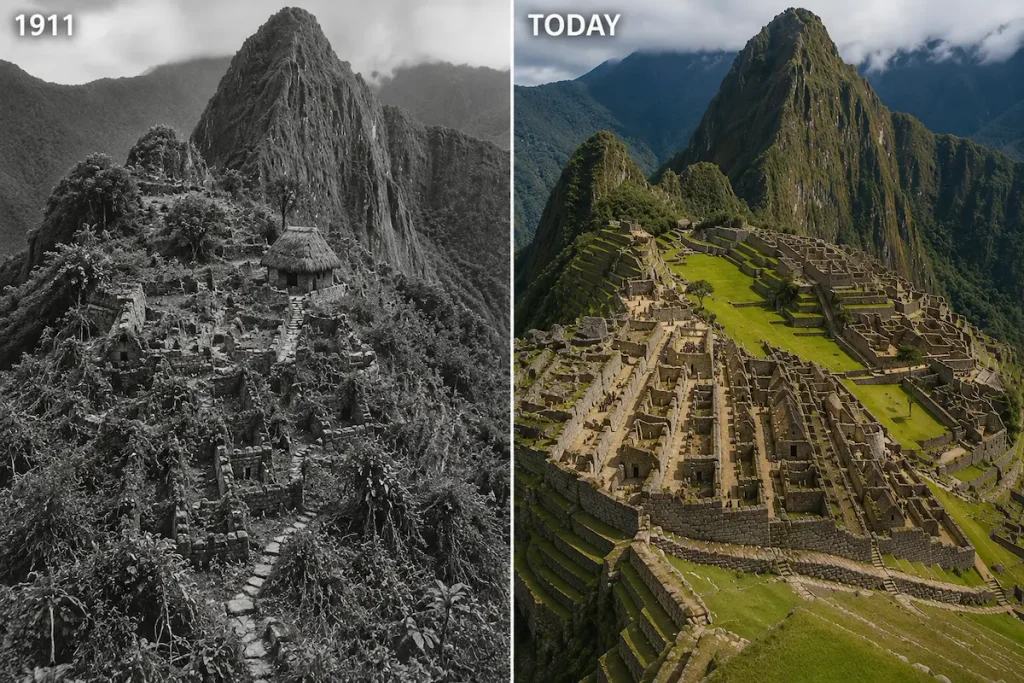
| Feature | Machu Picchu Originally | Machu Picchu Today |
|---|---|---|
| Buildings | Complete structures | Mostly stone walls remain |
| Roofs | Thatched roofs | Mostly absent |
| Terraces | Maintained and partly cultivated | Primarily preserved archaeological landscape |
| Water system | Actively supplying the settlement | Archaeological system remains visible |
| Streets | Used by residents and workers | Used mainly as managed visitor routes |
| Temples | Active ceremonial spaces | Protected archaeological structures |
| Population | Inca residents, workers and visitors | Archaeologists, staff and tourists |
| Surroundings | Mountain and cloud-forest landscape | Largely similar natural setting |
| Overall appearance | Living Inca settlement | Preserved archaeological site |
Did Machu Picchu Look Like It Does Today?
Not exactly.
The basic layout is remarkably well preserved. Terraces, stairways, plazas, temples, walls, and many other architectural features remain recognizable.
But removing the roofs alone dramatically changes how we perceive the city.
Add functioning buildings, cultivated terraces, flowing water, textiles, smoke from everyday activities, and people moving through the settlement, and ancient Machu Picchu begins to look very different from the ruins we know today.
What did Machu Picchu look like when Hiram Bingham arrived in 1911?
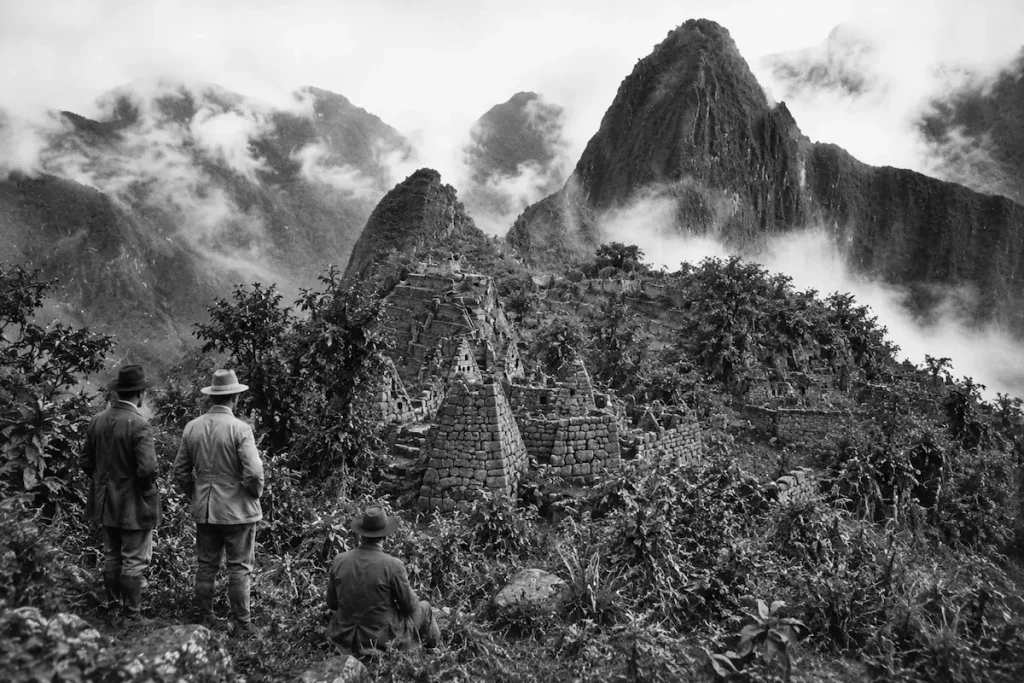
This is another important distinction.
Machu Picchu in 1911 was not what Machu Picchu looked like during the Inca period.
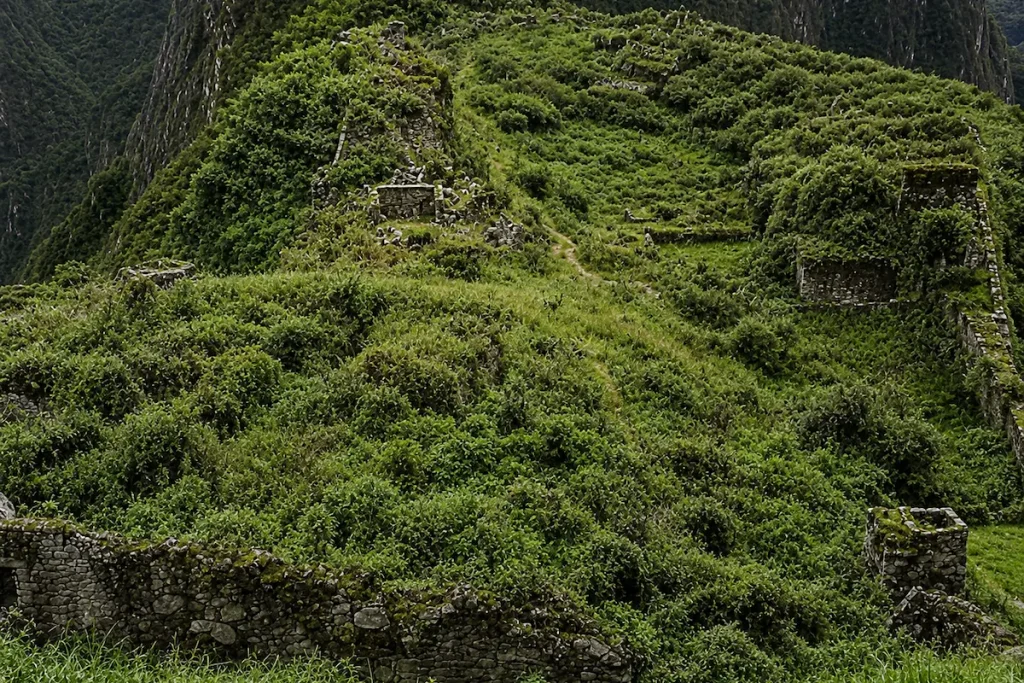
When Hiram Bingham reached the site in July 1911 with local assistance, much of the archaeological complex was covered by dense vegetation.
Trees, vines, shrubs, and other plants had grown around and over structures, making parts of the settlement difficult to see.
Local people already knew the area, and some terraces had been cleared or cultivated.
The famous panoramic appearance travelers recognize today developed gradually as archaeological work cleared vegetation and exposed, stabilized, and conserved the architecture.
Therefore, there are really three different versions of Machu Picchu to imagine:
Machu Picchu during the Inca period → Machu Picchu covered by vegetation centuries later → the conserved archaeological site we see today.
Can We Reconstruct Exactly What Machu Picchu Looked Like?
No reconstruction can be completely certain.
The stone architecture provides extensive evidence, but many organic materials disappeared long ago.
Wood, grasses, ropes, textiles, household objects, and other materials deteriorated much more easily than stone.
Archaeologists can therefore reconstruct the general architecture and organization of Machu Picchu with considerable confidence while some details remain uncertain.
That distinction matters.
A modern digital reconstruction showing Machu Picchu with roofs, inhabitants, crops, and furnishings should be understood as an evidence-based interpretation, not an exact photograph of the past.
Why Does Machu Picchu Look So Well Preserved?
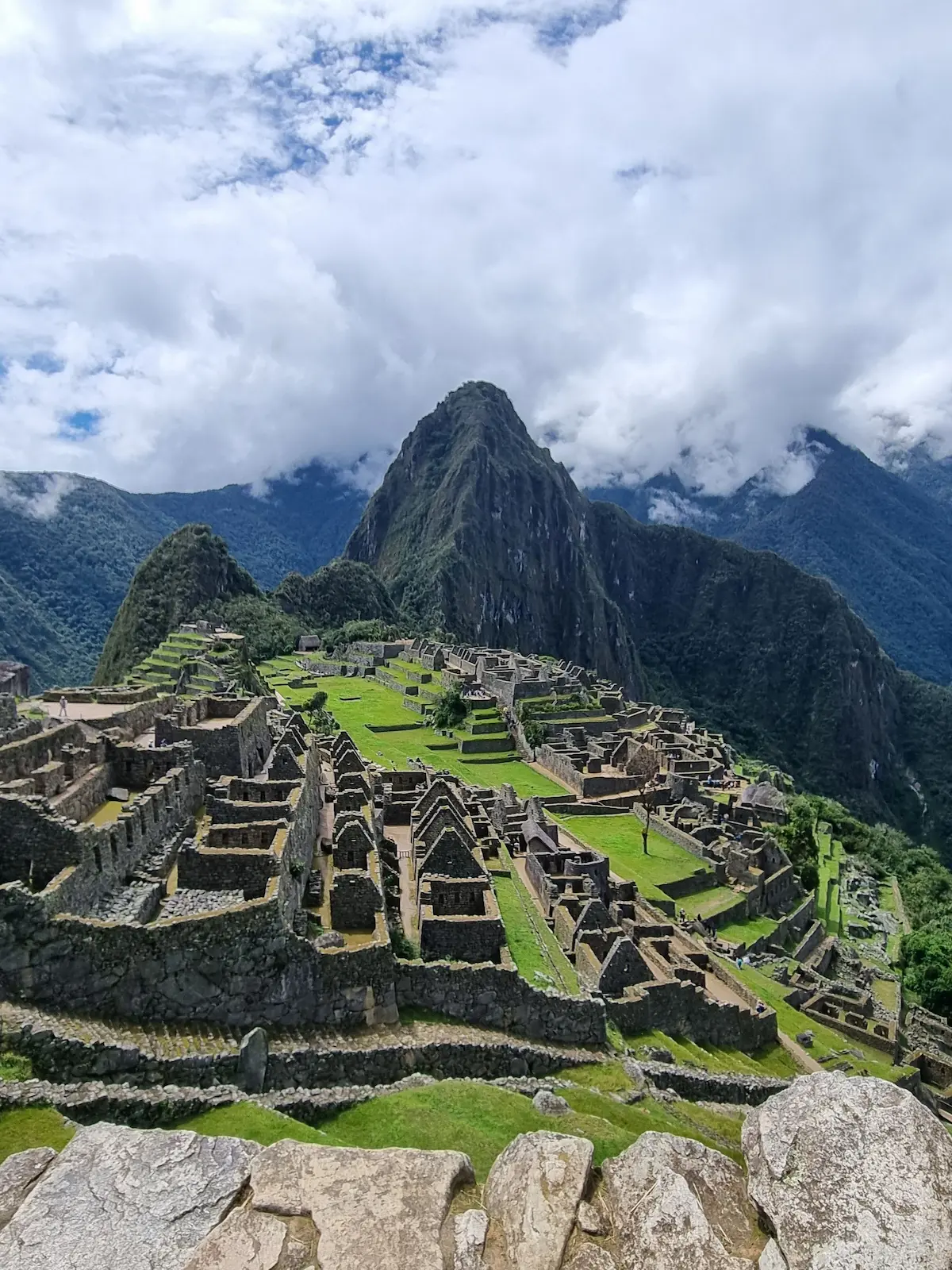
Machu Picchu’s remarkable preservation is partly related to the quality of Inca engineering.
The builders adapted structures to the mountain rather than simply attempting to reshape the entire landscape.
Stone walls often lean slightly inward, doorways and windows use characteristic trapezoidal forms, terraces stabilize slopes, and extensive drainage systems help manage rainfall.
The precision of the stonework in important structures is particularly impressive.
Many stones were shaped to fit neighboring blocks closely without conventional mortar.
More than five centuries later, much of that engineering remains visible.
Frequently Asked Questions
Did Machu Picchu originally have roofs?
Yes. Many buildings at Machu Picchu originally had pitched roofs constructed from perishable materials, including thatch. The stone gable walls still visible throughout the site provide evidence of their original form.
What were Machu Picchu’s roofs made from?
They were most likely constructed using wooden structural elements covered with ichu or similar Andean grasses.
Was Machu Picchu originally covered in grass?
No. The neat green appearance visitors see today should not be confused with the appearance of the functioning Inca settlement. Agricultural terraces were maintained and cultivated, while the urban sector contained complete roofed structures.
Was Machu Picchu colorful?
The granite buildings themselves were dominated by natural stone colors, but roofs, vegetation, crops, textiles, wooden elements, and people would have added considerably more color to the settlement.
How many people lived at Machu Picchu?
The exact population remains uncertain and may have changed over time. Machu Picchu was relatively small compared with major Inca urban centers such as Cusco, and archaeological interpretations generally describe a limited resident population associated with the estate and its activities.
Was Machu Picchu completely finished?
Researchers continue to debate aspects of Machu Picchu’s construction and occupation. Some architectural evidence may represent unfinished work, modifications, or different construction phases.
Why are there no roofs at Machu Picchu today?
The original roofs were made from wood and ichu grass, which naturally deteriorated over the centuries. Today, the remaining stone walls still reveal where these roofs once stood. You can see many of these original structures during a Machu Picchu tour.
So, What Did Machu Picchu Really Look Like?
Machu Picchu originally looked less like a collection of ruins and much more like a carefully planned mountain settlement.
Its stone houses and ceremonial buildings were covered with steep thatched roofs. Terraces were maintained, water flowed through channels and fountains, and narrow paths connected residential, agricultural, and ceremonial spaces.
People brought the settlement to life.
What survives today is essentially its extraordinarily durable stone skeleton.
Put the roofs, agriculture, water, textiles, and inhabitants back into that skeleton, and the familiar ruins transform into something very different:
a living Inca settlement built in extraordinary harmony with the Andes.