

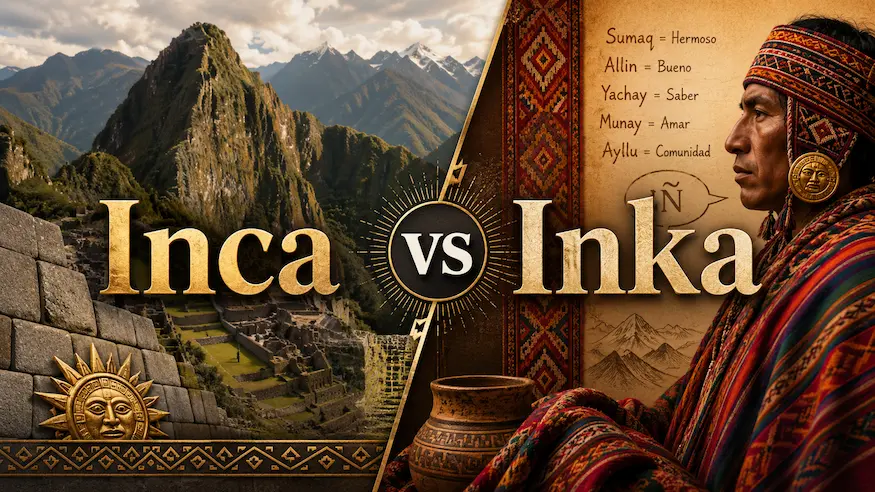

Comparative Chart of Inca vs Inka
| Aspect | Inca | Inka |
|---|---|---|
| Spelling | “Inca” | “Inka” |
| Common Usage | Used in most Western languages and in academic and tourist contexts. | Used in Quechua languages and in specific contexts, especially related to native culture and language. |
| Term Origin | Derived from Spanish and adapted by other European languages. | Closer to the original pronunciation in Quechua, the language of the Andes. |
| Historical Context | Associated with the pre-Columbian empire that dominated much of the Andean region in South America. | Reflects the culture and language of the same empire but respects more the native phonetics and writing. |
| Cultural Perception | More widely recognized and used globally. | Used by native speakers and in efforts to preserve Quechua culture and language. |
| Usage Examples | “The Inca Empire,” “The Inca civilization,” “Incas of Cusco.” | “Inka Kola,” “The Inka language,” “History of the Inka people.” |
| Current Relevance | Widely used in tourism, education, and media. | Growing use in cultural, educational contexts, and linguistic revitalization movements. |
| Symbolism | Represents the global and Westernized version of the Andean civilization. | Represents a more authentic and direct connection to Quechua roots and language. |
| Regional Preference | Preferred in most countries outside the Andes. | Preferred in Andean regions and by Quechua-speaking communities. |